Emergency Response Services for your fleet
Damage Stability & Stress Calculations in case of a casualty
As required by the Guidelines for the Development of Shipboard Oil Pollution Emergency Plans (SOPEP) under MARPOL Annex I, Reg. 37, and specifically MEPC.54(32) as amended by MEPC.86(44), par. 2.5.3.2, all relevant vessels must have prompt access to shore-based computerized damage stability and residual structural strength calculation programs to provide rapid response support in the event of a casualty.
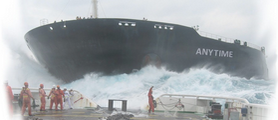
In cases involving grounding, outer hull breach with subsequent flooding, or other structural damage where calculations of damage stability and longitudinal strength exceed the vessel's onboard capabilities, assistance must be sought from a designated shore-based organization providing Damage Stability and Emergency Response Services on a ship-specific basis.
Our Emergency Response Capability
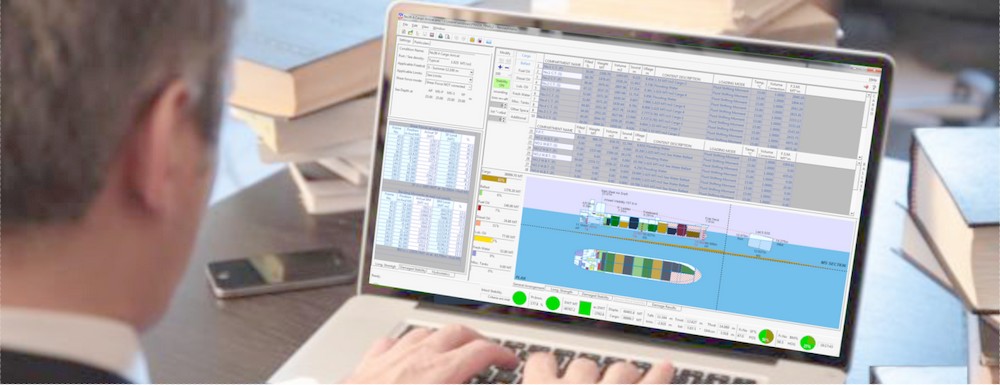
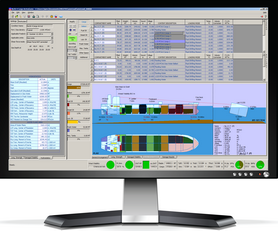
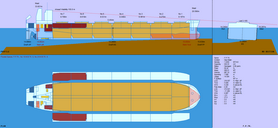
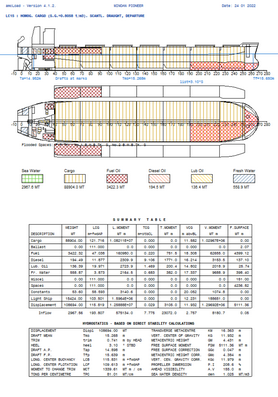
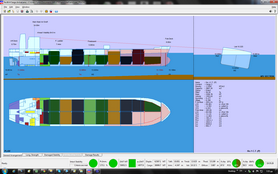
We can undertake this salvage response support using our approved salvage response program (amcLoad® approved ship salvage engineering software), which enables to rapidly evaluate damage conditions of the ship (features include the ability to analyze the intact condition, free flooding damage cases and various types of stranding).
During a vessel emergency your most valuable assets are time and confidence. Starting with the last known departure condition, amcLoad® allows for quick data collection and multiple scenario process evaluation for remedial action.
Functional Objectives
The shore-based software and the team operating it provide rapid calculations during an emergency to determine:
•Residual Buoyancy: Whether the ship will remain afloat after flooding.
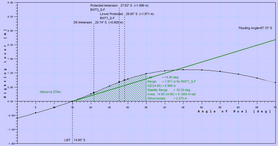
•Damage Stability: The vessel's ability to resist capsizing in its damaged state.
•Structural Stress: Whether the hull girder can withstand the bending moments and shear forces resulting from the grounding or collision.
•Oil Outflow: Estimating potential spills based on tank breach locations.
Why "Shore-Based"?
The intent behind requiring a shore-based service-rather than relying solely on the ship's own loading computer is to ensure that:
•Expert Oversight: Naval Architects & Marine Engineers can verify calculations.
•High Computing Power: Complex modeling can be done off-ship.
•Redundancy: If the ship's power or computer systems are compromised during the casualty, the data is still accessible and actionable from the shore.
24/7 Availability
Our services for damaged condition seaworthiness calculations are on a 24-hour basis. We provide clear guidance to ship operators and master regarding the information required from the vessel in order to perform accurate damage stability and strength assessments beyond the onboard capabilities.
|